Is a storm door worth adding to your front door
A storm door protects your entry from rain and adds fresh air to your house. Learn how to choose full glass and decorative storm doors for your home.
 Reported by Isaiah Jernigan
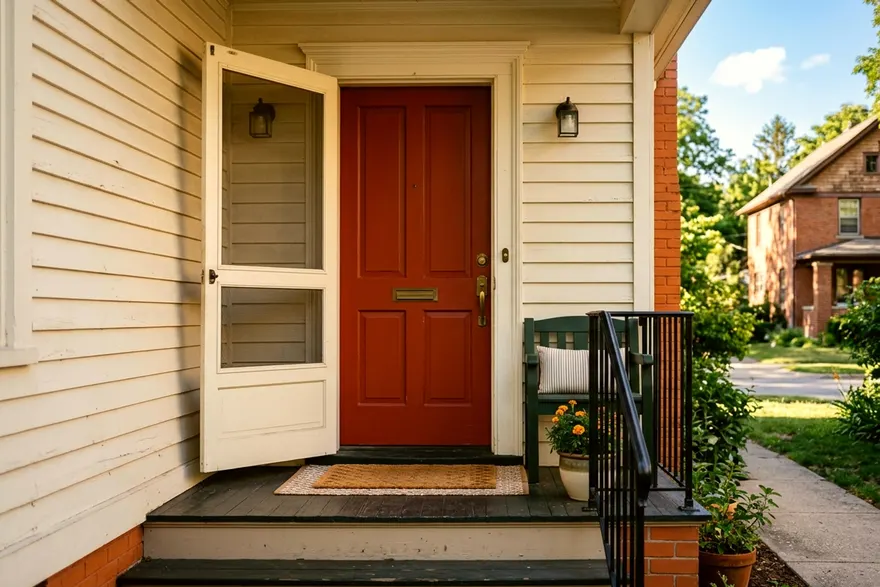
An extra door adds a barrier of protection against wind and rain while letting fresh air into the house. Adding one makes sense if your primary door takes a beating from the weather or if you want to leave the main door open on a mild afternoon.
What a storm door does for the main door
A solid front door takes a daily beating from the elements. Rain blows against the panels and water sits on the threshold. Wood swells with moisture and paint eventually cracks.
Adding an outer glass door puts a shield between your primary door and the weather. The outer door takes the hit from the wind and helps keep rain off the threshold.
This extra barrier can help your paint or wood stain last longer, so you may spend less time on upkeep. A tight seal on an outer frame can also cut drafts.
The benefits change when the weather turns mild. Opening a solid entry door leaves a house vulnerable to flying insects and stray animals. A storm door with a screen helps with this problem. You can pull the solid door open and let a gentle breeze blow right through the screen.
The hallway fills with natural light. An outer door also creates a buffer zone for visitors. You can sign for a package while keeping a closed door between you and the delivery driver.
Full view, partial view or retractable screen
Storm doors come in several main body types. The right choice depends on how much glass you want to see and how much work you want to do each season.
A full view door is exactly what it sounds like. A thick frame holds a large sheet of glass from top to bottom. This style lets in the maximum amount of light. It also gives a clear view of the primary door behind it.
If you spend time painting your front door a beautiful color, a full view frame lets that color show through. Many full view models come with a separate screen panel. You pull the heavy glass panel out of the frame in the spring and snap the screen in.
Finding a safe place to store a large glass panel until fall takes up closet space. A partial view door solves this by using a solid lower half and glass on the top half. The solid bottom usually features a metal or composite panel.
This split design takes more abuse. Pushing the door open with your knee hits a tough panel instead of fragile glass. A partial view is a smart pick if energetic dogs scratch at the door.
A retractable screen gives you glass and screen in one frame. The top half of the glass slides down on a track. As the glass lowers, a rolled screen pulls down from a hidden housing at the top of the frame.
You never have to remove large panels or store anything under a bed. You can change from a glass barricade to a breezy screen in a few seconds.
Doors that face strong afternoon sun
A tight glass door traps air against the house. If your entry faces west or south, the afternoon sun will bake that trapped air. The space between the doors can trap heat like a greenhouse.
Heat trapped in that small gap can climb high on a clear summer day, and heat can harm an entry door. Plastic trim around glass inserts may warp.
Dark paint may blister and peel, and solid wood doors may shrink or split, so read the entry door maker's guidance for a door in strong sun.
An outer glass barrier can add to the problem if you have to refinish a stained wood front door. Leaving the screen in place may reduce the heat buildup.
If your porch gets strong direct sun, avoid leaving a solid sheet of glass shut tight in summer without checking both makers' guidance. Lower the glass on a retractable model to expose the screen. The open screen lets some of the hot air escape.
If you have a full view model, swap the glass for the screen before the hot weather arrives. Some owners leave the screen in year round just to avoid the heat trap entirely.
Read both makers' warranty and installation guidance first
The paperwork for your existing front door holds the answer to warranty questions. Some entry door manufacturers address heat from storm doors in their warranty terms, so check yours.
Read the papers that came with your main door before you buy an outer frame.
Look for a brand name on the hinges if you bought an older house with no papers. You can look up their specific rules online.
The storm door company also provides installation guidance. An outer door is heavy and wind can pull hard on the hinges, so follow that guidance for what the frame must attach to.
The maker may list the width of flat trim required to hold the mounting screws. The exterior trim around your entry needs a close look before you start.
Brickmould is the decorative wood trim surrounding your door frame. Rotting brickmould covered in peeling caulk may not hold a heavy metal door.
Screws may pull out of rotten wood, so replace bad trim boards before you try to hang a new frame. Make sure you have enough solid wood to follow the installation guide exactly.
Pick a style that does not hide a nice front door
An outer door changes the look of your house from the street. You want the new frame to blend in rather than clash with your architecture. You can try to improve curb appeal by matching the new frame color to the existing trim.
A white outer frame against white trim blends in. The storm door practically disappears and your main door remains the focal point. Another approach is matching the outer frame to the color of the main door.
A red outer frame over a red solid door creates a cohesive look. Decorative storm doors offer another option for a plain porch.
These models feature etched glass patterns or metal scrollwork set into the frame. They work well over a simple, solid wood door.
Just be careful not to mix competing patterns. Adding a busy decorative outer frame over complex glass panels looks cluttered. A plain full glass model is usually the best choice to show off a fancy primary door.
The handle finish also matters. If your main entry uses dark bronze hardware, pick an outer handle in the same dark finish. Hardware options include shiny brass or brushed nickel.
Matching the hardware ties both doors together so they look like a planned set. Think about both hardware sets at once if you need to choose a front door.
Closers, latches and a safety chain
The hardware on an outer door does serious work. The hinges bear the weight, but the closers control the motion. Most outer doors use a pneumatic cylinder to pull the frame shut.
The cylinder contains a piston and a spring. As you pull the handle, the rod extends. When you let go, the spring pulls the door closed while air pressure keeps it from slamming.
Some doors use two closers, one at the top of the frame and one at the bottom, to pull the heavy frame shut evenly.
You can adjust a screw on the end of the cylinder to change the closing speed. Turn the screw one way and the door shuts fast. Turn it the other way and the door glides shut softly.
The door should close hard enough to click the latch without shaking the wall. The latch itself needs to catch firmly every time.
If the latch is loose, a strong breeze may blow the door wide open. You can choose a push button handle or a lever handle. A lever is much easier to pull open if you have full hands.
A safety chain or wind chain is a common storm door feature, so check the maker's installation guidance. The chain attaches the top of the door directly to the house frame. A strong gust of wind can easily yank the handle right out of your grip.
Without a chain, a gust can throw the door open and bend the hinges.
The chain helps stop the door from flying open and damaging the frame.
More from down the street
10 modern front door ideas for a plain house front
A modern front door upgrades a plain house front with clean lines and fresh colors. Explore ten design ideas to improve your entry and welcome guests.
How to choose a front door that suits your house
Find the right front doors for homes by comparing wood, steel and fiberglass materials, glass options and ENERGY STAR ratings for your climate.
What is making small holes in your yard and what to do
Find out what is making small holes in yard areas by checking the size, shape and mounds, then decide how to repair the lawn and stop the digging.