11 porch decor ideas that hold up to sun and rain
Create welcoming porch decor that stands up to sun and rain all year. Find durable rugs, planters, seating and lighting that handle harsh weather.
 Reported by Isaiah Jernigan
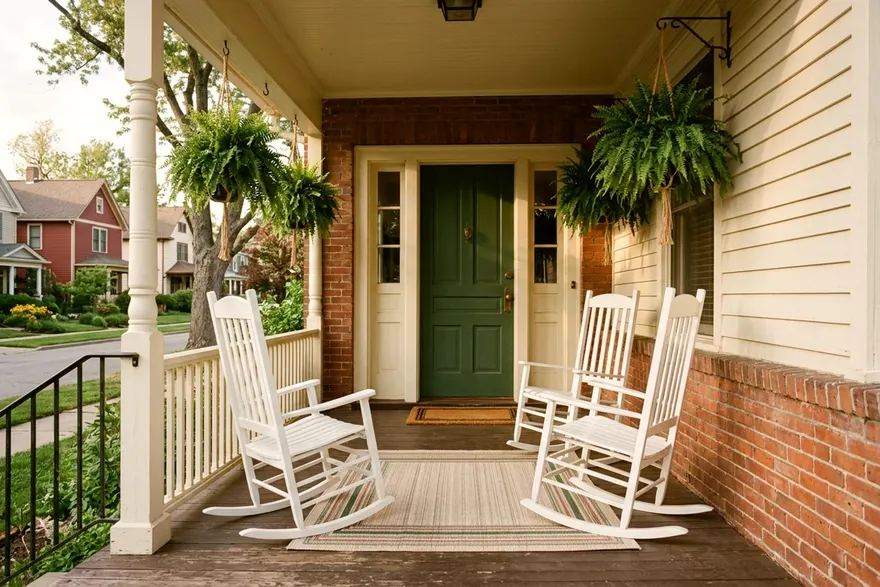
Good porch decor handles baking afternoon sun and blowing rain without fading or falling apart. You can build a welcoming entryway that survives the weather by choosing heavy materials, outdoor fabrics and pieces meant to stay outside.
1. Pick one color scheme drawn from the house
Look at the house siding, trim and front door to pull a single color palette from these existing details. Matching new outdoor pieces to the permanent fixtures ties the whole space together. A dark green front door pairs naturally with green chair cushions for a deliberate, grounded look.
Avoid buying random pieces simply because they look nice on a store shelf. A unified color plan stops the entryway from looking cluttered. Sticking to a tight scheme is a simple way to improve curb appeal from the street.
Match your metal finishes too. If the door handle is brushed brass, match it with brass lighting and brass planters.
Bright colors often fade fast under direct summer sunlight. Earth tones, deep greens and navy blues hold their color better over the long haul. Choose fabrics dyed all the way through the threads rather than printed on the surface. True outdoor dyes tend to hold up better in baking heat.
2. Unroll an outdoor rug sized to the seating
An outdoor porch rug defines the seating area and catches dirt. Pick a rug large enough that the front legs of every chair rest completely on the fabric. A small rug sitting under a center table looks lost.
True outdoor porch rugs use synthetic fibers that shed water. A woven plastic rug dries fast after blowing rain soaks the floor. Leave thick, plush carpets inside the house.
You need a flat weave that handles heavy boots, wet paws and muddy shoes. Vacuum the rug just like you would an indoor carpet. Regular sweeping stops grit from cutting the synthetic fibers under heavy foot traffic.
Pair your new rug with seating that features removable covers. Dust, dirt and pollen settle on outdoor fabrics every spring. Unzipping the covers and washing them saves you from scrubbing stains by hand. Look for outdoor acrylic fabrics that resist mold and dry quickly.
3. Place planters with drainage at the steps
Set heavy planters at the top of the steps. They frame the entrance beautifully. Choose thick resin or glazed ceramic pots that tolerate baking heat and freezing cold.
Every pot needs a wide hole in the bottom. Heavy rain turns trapped soil to mud and drowns plant roots without proper drainage. Set the planters on small ceramic feet to help keep trapped moisture off the wooden floorboards underneath.
Keep the pots wide enough that heavy wind cannot tip them over. Dense soil and a broad base help keep them upright in wind. A fallen pot leaves a giant mess across your clean floor.
Hang wide ferns between the porch columns to add life at eye level. Ferns thrive in the partial shade provided by a solid roof overhead. Use thick metal wire hangers rather than cheap plastic hooks, which turn brittle in the sun and snap without warning. Water the hanging plants often since baskets dry out very fast in a summer breeze.
4. Install lanterns and a better porch light
A strong porch light makes the front door safe after dark. Replace a small builder fixture with a heavy metal light. Brass or powder-coated steel often holds up to blowing rain better than painted plastic. Check the product label for outdoor or wet location ratings.
Size matters heavily when picking a main light. A tiny fixture gets totally lost against wide siding. Look for a large light that casts a wide glow.
It should throw enough light to see faces clearly without glaring into the street. Wipe the glass panels clean every few months. Bugs and dust gather quickly, dimming the light and making the entrance look neglected.
Add heavy glass lanterns by the seating area for a soft glow. Fill them with battery-operated outdoor candles on an evening timer. You gain the look of a flickering flame, and the product label will say if they are rated for outdoor use. Heavy glass and metal frames keep the lanterns upright when the wind picks up.
5. Put rockers or a bench by the door
Comfortable seating invites guests to sit and talk. Two heavy rocking chairs or a sturdy bench give people a place to rest. Choose solid dense wood like teak or cedar.
You can also opt for thick composite materials that ignore rain entirely. Test the seating before you settle on a spot. Sit down and check the view to ensure you have a clear line of sight without staring straight into a streetlamp.
Place a small side table between the chairs. Everyone needs a spot to set a morning coffee or a cold drink. A slatted metal or wood table works best for outdoor use because wide slats let rainwater fall straight through to the floor. You never find a dirty puddle waiting on top of the table.
Keep the furniture scaled to the depth of the floor space. Clear walking room past the chairs remains essential to reach the front door. Take care to hang your porch swing so it swings clear of windows, walls and rails.
6. Paint the porch ceiling to brighten the space
A dark roof overhang absorbs light and leaves the entryway looking gloomy and cramped. Paint the ceiling a bright, crisp color to reflect natural light down into the seating area. Light blue is a traditional choice that mimics the sky. It brightens the whole front of the house instantly.
Use an exterior acrylic latex paint formulated for outdoor siding. Exterior paint flexes with temperature changes and fights mold. The right paint helps resist peeling when humidity rises and condensation forms overhead. A glossy paint finish makes cleaning easier since smudges and insect spots wipe right off with a damp rag.
Clean the ceiling thoroughly before opening any paint can. Scrub away dirt, wasp nests and old dust. A spotless surface ensures the new paint sticks tight and dries smooth.
7. Mount house numbers on a porch column
Clear house numbers remain vital for guests and delivery drivers. Move your numbers off the dark siding. Mount them directly on a bright painted porch column. A solid metal number stands out clearly against a white wood or fiberglass column.
Finding the right spot matters. Use stainless steel screws, which resist rust.
Cheap screws bleed dark streaks down bright white paint after a rainstorm. Drive the screws deep to hold fast in high winds. Stand at the curb and check the visibility. The numbers need to be legible from a passing car on a rainy night.
Pick a style that matches the home. Modern homes look great with sleek, tall numbers while older homes suit classic, thick digits. Avoid cheap stickers or thin plastic numbers. They warp, peel and fade after a few summers in direct sun.
8. Create a spot to stash cushions before storms
Even the best outdoor fabrics need cover during a severe storm. Keep a waterproof deck box tucked in a corner. Use it to store cushions and pillows.
A solid resin box with an overlapping lid keeps driving rain out of the dry storage area. Keep a small towel inside the box. You can quickly wipe down the table or chairs after a sudden shower passes.
Choose a low-profile box that blends into the wall. You can also use a sturdy wooden bench with hidden storage under the seat. Dual-purpose furniture saves valuable floor space. The main goal is making the cleanup take only a few moments.
Dry storage can extend the life of outdoor fabrics. It also stops strong winds from blowing your favorite pillows into the street. A dedicated box means you avoid dragging wet, heavy cushions inside the house.
9. Hang outdoor curtains for shade
Afternoon sun turns an open entryway too hot to use. Outdoor curtains block harsh sunlight. They can make your seating area feel cooler. Heavy acrylic fabrics offer deep shade and stop blowing rain from soaking the furniture.
Mount rustproof curtain rods securely to the ceiling joists. The hardware must bear the heavy weight of wet fabric and survive serious wind pulling at the drapes. Choose outdoor-rated rings that glide smoothly.
You want to pull the curtains shut in a hurry when rain starts. Hem the curtains so they float just above the floor. Fabric dragging on the dirty boards wicks up rainwater and stains quickly.
Tie the panels back to the columns when the weather stays calm. Thick fabric ties keep the curtains from flapping constantly in a breeze. Neutral colors like tan or light gray hide dust better than stark white. They look great against natural wood floors.
10. Layer a heavy welcome mat over the rug
The main outdoor rug handles the seating area, but the front door needs dedicated dirt control. Place a heavy, coarse welcome mat directly in front of the door.
A rough mat strips mud and wet leaves from heavy boots. It stops dirt before it crosses the threshold. Shake the mats out over the lawn weekly. Trapped sand grinds down the fibers and ruins the backing over time.
Rubber backing keeps the mat firmly in place during bad storms. Thin mats slide around and curl at the edges when left in the sun. A thick, heavy mat stays flat. It reduces tripping hazards when you walk out carrying heavy bags.
You can layer a slightly larger patterned rug underneath the coarse mat. A layered look frames the doorway beautifully. Ensure both pieces dry out quickly since trapped moisture can rot wooden floorboards. Proper airflow is essential to keep porch floor boards sound year after year.
11. Arrange heavy ceramic stools for extra seating
Neighbors stop by and you always need another place to sit. Glazed ceramic garden stools offer an easy seating solution that handles weather well. Check the product label for freezing temperatures.
Sun and rain are easy on a hard glaze. Look for stools with hollow bottoms. They weigh slightly less for moving around but still hold firm in heavy wind.
These stools double as extra side tables. You can set a plate or a book on top without worrying about water rings. Their heavy weight keeps them exactly where you put them. Strong winds knock lighter patio furniture around easily, but ceramic stays put.
Pick stools in your chosen accent color. They tie the whole space together. Stools take up very little floor space and tuck neatly next to the main chairs. You gain flexible hosting options without crowding the walkway.
Keep your porch decor looking fresh
Good outdoor pieces last longer with a simple cleaning routine. Take an afternoon every spring to wash down the furniture. Sweep away winter cobwebs and leaves.
A bucket of warm soapy water and a soft brush removes sticky pollen and road dust that builds up over the winter months. Keep a bottle of touch-up paint handy. Fix small chips on metal chairs before rust takes hold and ruins the finish.
Check the drain holes in your planters regularly. Ensure thick roots or compacted soil have not blocked the water flow. Wash your cushion covers on a gentle cycle, and let them air dry completely before zipping them back onto the foam inserts. Check the care label before using a dryer, since heat can shrink some fabrics.
Inspect the lighting fixtures for loose screws. Clean the glass panels to keep the light shining bright and clear. Steady, simple upkeep prevents grime from baking into the furniture surfaces.
More from down the street
How to choose porch columns for the style of your house
Find out how to choose porch columns that match the style of your house. Learn about sizing, wood, fiberglass, and PVC wraps to improve your front porch.
What to plan before you build a screened in porch
Plan your new screened in porch by reviewing the placement, roofs, floors, screens, permits, and knowing when to build a 3 season porch instead.
How to hang a porch swing so it hangs safe and level
Learn how to hang a porch swing safely from solid framing with the right hardware so you can enjoy a comfortable and level seat all season long.