9 planting ideas for the bed in front of your porch
Get clear ideas for front porch landscaping that frame your house. Learn how to space plants, layer heights and pick shrubs for year-round color.
 Reported by Isaiah Jernigan
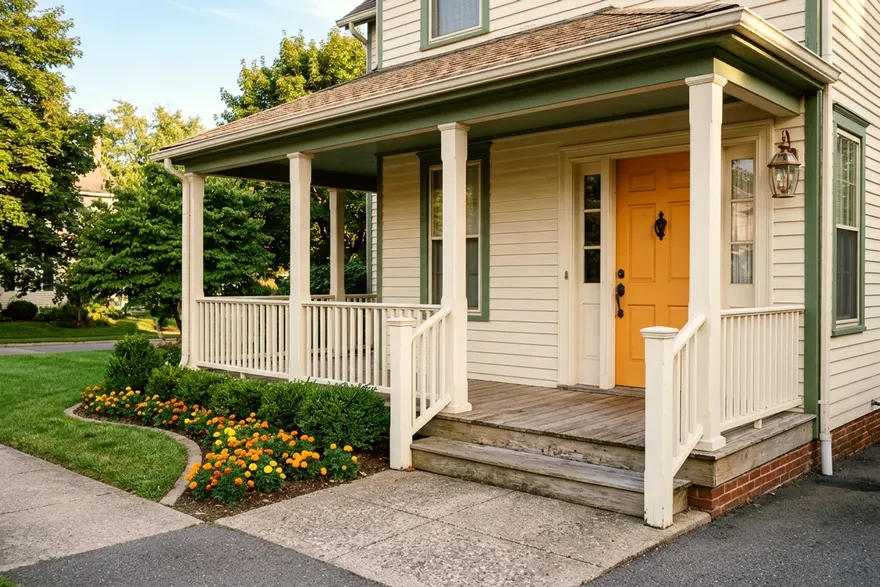
The best ideas for front porch landscaping frame your house while leaving room for the plants to grow. A bare dirt strip turns into a neat, layered bed that looks good in every season. Start by matching the plant height to the porch and spacing everything away from the siding.
1. Measure the bed and note sun and shade
A tape measure tells you the exact footprint before you buy a single plant. Find the depth from the porch edge to the grass and the length along the foundation. Knowing these dimensions keeps the bed from looking crowded. A garden hose outlines the front edge well so you can check the curve from the street.
Watch the front of the house for a full day to record when the sun hits the dirt. A yard facing south bakes in the afternoon, while a north wall stays cool and dim. This sunlight record helps you pick plants that thrive exactly where they go. Full sun means the plant needs many hours of direct light every day, so check the plant tag.
The roof overhang blocks the rain and leaves a dry zone underneath. Plants under an overhang may need water by hand, even after a heavy storm. Check the soil while measuring so you can mix compost into hard clay or rocky dirt. Soft ground gives new roots room to grow and helps water drain away from the house.
2. Keep shrubs a good distance from the foundation
Plants placed right against the siding hold moisture against the house. Give every shrub space to reach its mature size without pressing into the wall. Look at the plant tag for the mature width. A clear gap between the full-grown leaves and the foundation lets air flow freely.
This empty space keeps the house dry and reduces the chance of rot. Air movement dries out the siding after a heavy rain. Damp air gets trapped when branches touch the wood. Paint may peel faster in spots that never get a chance to dry out.
Keeping the foundation clear also protects the home from pests. Branches touching the wall can act as a bridge for insects. A bare dirt or mulch path behind the plants may help keep bugs off the window sills. An open path also makes it easy to walk behind the bed and spot trouble early.
3. Use low shrubs to hide the porch skirting
A row of compact shrubs covers bare foundation blocks or wood lattice. Many older homes sit on concrete pillars that look cold and unfinished. Pick varieties that stay low by nature so they stop growing below the floor level. This hides the unfinished base of the house while keeping the view clear from the porch.
Read the plant tag for the mature height before buying. A shrub that tops out just under the porch trim works best. Dwarf varieties stay small, saving you from pruning tall plants that block the handrails. Many ways to improve curb appeal start with a neat green line along the foundation.
Keep the shape of the plants simple. A solid hedge of green leaves draws the eye up to the porch and the front door. The plants should ground the house, not distract from it. A tight row of low shrubs hides old concrete and makes the porch look like it sits on a green foundation.
4. Frame the steps with a matching pair
An identical plant on each side of the porch steps marks the entrance. A matching pair guides people right to the front door. This layout works best with a plant that holds a distinct shape, like a rounded boxwood or a cone-shaped evergreen. Symmetry at the stairs makes the whole front of the house look organized.
These pair well planted directly in the ground or set in heavy pots on the bottom step. Heavy planters should match the trim or the front door color. Potted plants dry out faster than plants in the ground. Check the soil often during the summer.
Set these anchor plants far enough out from the stair rails so they leave plenty of room. A wet bush brushing against a leg ruins a good welcome. Give the plants room to widen out over the years without closing in on the walkway. Plan the planting with your front walkway ideas in mind.
5. Layer heights from the walk to the house
Arrange the bed like stadium seating so every plant shows. The tallest shrubs go in the back against the porch skirting. Medium perennials fill the middle row. Groundcovers or short border plants sit along the front edge next to the lawn.
This layout steps the eye up from the grass to the porch floor. A tiered bed looks full and organized. Tall plants in the back never shade out the shorter ones in the front. The front row can hold the mulch in place near the edge of the grass.
Stagger the plants in a zigzag pattern rather than lining them up in straight rows. A zigzag fills the empty spaces and makes the bed look thick. Group small plants in natural odd numbers like three or five. A drift of three small plants catches the eye better than a single plant stranded in the mulch.
6. Add evergreens for winter shape
A bed filled only with summer flowers turns to bare sticks in December. Mix in evergreen shrubs to hold the structure of the bed through the cold months. Small junipers or broadleaf evergreens keep their color long after the first frost.
Space these permanent plants out along the length of the porch. The evergreens remain when the leaves drop from the other bushes. They give the front yard form and life during the winter. A green bush dusted with snow looks far better than an empty patch of mulch.
Look for evergreens that fit the scale of the house. A low, spreading juniper covers a lot of ground and fills the bed. A small, rounded holly bush provides dark green leaves and, on some varieties, red berries in the winter. Check the tags so you know the variety survives the winter temperatures in your state.
7. Tuck in bulbs and perennials for color
Seasonal plants fill the gaps between the evergreen shrubs nicely. Hostas, daylilies and black-eyed Susans bloom and fade on a reliable schedule. Planting them near the evergreens helps the bed look lively rather than empty when the perennials die back.
Daffodil or tulip bulbs planted in the fall bring early spring color. These scatter easily in small groups between the larger shrubs. They push up through the soil to give the front of the house a bright wash of color before the rest of the yard wakes up. Plant the bulbs pointed side up and cover them with soil to the depth on the package.
Stagger the bloom times so something is always showing color. Pick a perennial that blooms in May, another that hits its peak in July, and a late bloomer that holds on until October. When one plant drops its flowers, the next one is ready to open. Clip off the dead flowers to keep the bed looking tidy.
8. Leave room to paint and repair the porch
Wood porches need upkeep, and a clear space makes the work possible. Keep the plants far enough back to make room for a ladder. A tight wall of bushes makes it hard to pressure wash the siding or keep porch floor boards sound. Open ground makes carrying storm windows and screens back and forth much safer.
Leave enough clearance to step between the bed and the porch rails. Room to swing a paintbrush or replace a board makes regular maintenance simple. This space protects the house and keeps the plants from getting crushed by heavy work boots and dropped tools.
Think about the gutters and the roof as well. A ladder needs a flat, stable patch of ground to rest on. Delicate flowers planted over every inch of the soil will get ruined the first time the gutters need cleaning. Leave a few sturdy spots in the mulch to set ladder feet safely.
9. Call 811 before you dig a new bed
Before putting a shovel in the dirt, check for buried utility lines. Calling 811 before digging is free, and having the underground lines marked costs you nothing, according to the federal pipeline safety agency PHMSA. They send utility crews to spray paint or place flags over the gas, water and power lines hidden under the lawn.
Do not skip this step for a few shallow holes. PHMSA says state laws require a call 48 to 72 hours before digging, and even small jobs such as planting trees or shrubs need one. Wait for the markings to appear, and check your local building department or state one-call center for the exact wait in your state.
More from down the street
11 front walkway ideas that lead guests to your door
Find the right front walkway ideas to guide guests to your front door with path shapes, edging, border plants and paving materials.
Should you put a fence in your front yard
A front yard fence gives your house a clear boundary and adds curb appeal, but you need to check local height rules and HOA covenants before you build.
How to landscape around a mailbox without blocking delivery
Get practical ideas for mailbox landscaping that add curb appeal while following USPS rules for height, setback and clear delivery access.