14 garage organization ideas that fit the car back in
Get your parking spot back with these practical garage organization ideas that help you clear the floor, sort your tools and claim the space.
 Reported by Jolene Imhoff
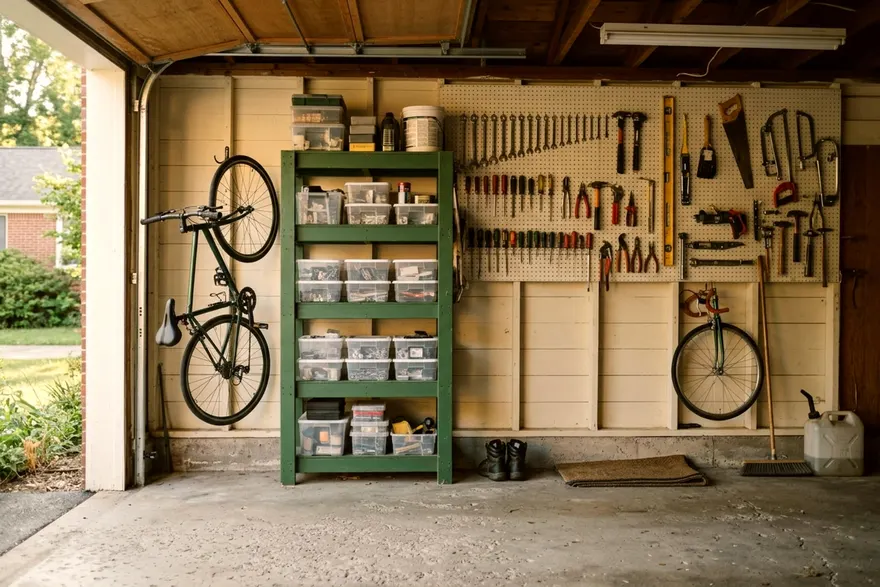
Parking your car inside protects the paint from harsh weather and saves you a cold walk in the rain. Reclaiming that space takes some honest sorting and a solid plan to get everything off the concrete. Start near the driveway and work your way toward the back wall. You can turn a cluttered storage room back into a functional parking spot with a little steady effort.
1. Empty the room and sort the clutter
You cannot organize a crowded room without seeing exactly what you own. Pull everything out onto the driveway on a dry morning. Spreading your gear across the concrete gives you a clear view of the problem and leaves the interior empty. An empty room lets you sweep the floor and check the walls for water damage.
Sort every single item into a keep pile, a donation pile and a pile for the trash. Be strict about what goes back inside. Toss broken toys and rusted parts that you will never repair, and check your local trash rules for paint and chemicals. Call the city bulk trash pickup for large broken items like old mowers or ruined shelving.
Box up the usable donations and drive them to a thrift store right away. Only bring back the things you actually use and need to store. Holding onto broken tools or leftover materials from old projects just eats up your valuable space.
2. Mark a parking zone on the floor
Pull your car inside and open all the doors. Walk around the vehicle to see exactly how much room you need to get in and out comfortably. You also need clearance to open the trunk and carry groceries past the bumper without scraping the paint.
Mark the four corners of this required parking zone with bright painter tape. Connect the corners to draw a visible box on the concrete. This taped box becomes the strictest boundary for the entire project.
Nothing can sit on the floor inside these lines. Also, nothing hanging on the walls can stick out far enough to hit a car door when you open it. This visual guide stops you from creeping back into the parking area as you add shelves.
3. Zone the walls by task
Group similar items together before you put them away. Keep gardening supplies in one group, automotive fluids in another and sports gear in a third. This sorting prevents you from searching all over the room when you need to finish a specific chore.
Assign each category to a specific wall or corner. Dedicate the space near the house entry door to things you grab often. Push seasonal items toward the dark corners.
Zoning stops you from walking back and forth across the room. When you need to change the oil, all your tools and drain pans sit together in the same automotive zone.
4. Mount a pegboard or slat wall for hand tools
Bare walls are wasted space when you are trying to clear the floor. A classic pegboard or a paneled slat wall turns an empty side wall into a shallow storage center. This flat setup holds a lot of tools without crossing into your taped parking zone.
Hang hammers, wrenches and screwdrivers right at eye level. Use proper metal hooks that lock into the board so they stay put when you grab a tool. Arrange the layout so the tools you use most often sit right in the middle.
Tracing the outline of each tool with a permanent marker helps you put it back in the exact same spot. A quick glance at the board tells you immediately if a wrench is missing.
5. Stack shelving and labeled clear bins along the back wall
The back wall usually offers the most depth. Stand heavy metal or plastic storage racks here to hold your bulkier items. Solid shelves keep things off the damp floor and use the vertical space all the way to the ceiling.
Pack loose supplies into clear plastic bins so you can see what is inside at a glance. Stick a large printed label on the front of every bin anyway. Cardboard boxes can attract bugs and fall apart when they get wet. Always choose plastic tubs for long storage.
Separate out your hazardous liquids before you load up those shelves. Check things not to store inside to keep your home safe from fumes and pests. Check each product label for storage directions, and keep chemicals out of reach of children and pets.
6. Add heavy hooks for bikes and ladders
Bikes and ladders take up a lot of floor space. Heavy-duty wall hooks get bicycles and extension ladders up and out of the way. Hanging them flat against the wall reclaims floor space.
Always find the wooden wall studs first. Anchor your hooks directly into the solid wood. A heavy ladder can pull a simple drywall anchor out of the wall. Use a stud finder and follow the hook maker's instructions for screws.
Mount these large pieces high enough to clear the hood of your car. You want to walk past them without snagging your clothes or bumping your shoulder. Padded hooks protect the paint on your bike frame from deep scratches.
7. Install ceiling racks for things used once a year
Look up to find the largest empty storage area in the room. Overhead racks hanging from the ceiling joists hold plastic tubs, holiday decorations and bulky camping gear. This dead space above the garage door tracks works perfectly for long term storage.
Reserve this high space for things you only need once a season. Check the rack's weight rating and installation instructions, and use a sturdy step stool to get items down. Keep heavy parts or frequently used tools closer to the ground.
Make sure the overhead racks do not block the light fixtures. Leave enough clearance so you can slide boxes in and out without fighting the ceiling. Secure the lids on all overhead tubs to keep dust and spiders out.
8. Create a spot for yard tools by the door
Rakes and shovels naturally belong near the main garage door. You want to grab them quickly on your way out to the yard. You also want to avoid carrying dirty tools past your clean car.
Screw a dedicated tool rack into the wall studs right inside the opening. Stand the long handles up straight so they stay flat against the wall. Some racks use tension grips to hold the handles, while others use simple wooden pegs.
This setup keeps dirt and dried grass away from the interior of the house. It also stops heavy shovels from falling over onto the hood of the car. Sweeping up dried mud is much easier when all the yard tools sit just inches from the driveway.
9. Keep the garage door path and sensors clear
The large door needs a completely clear track to open and close safely. Keep brooms, tall boxes and shelving units well away from the metal rails. A falling broom handle can jam the track.
Check the photo sensors near the bottom of the door tracks. A box too close to the sensor can make the system think an object is blocking the path, and the door may not close.
Always leave any repairs to the tracks, the motor or the tension springs to a professional. The springs hold a lot of tension and can cause severe injury if they snap. Stick to organizing the shelves and leave the mechanical work to the experts.
10. Corral sports equipment in mesh bags
Loose basketballs and baseball bats roll under tires and cause tripping hazards. Grouping them together keeps the floor clean and makes weekend games much easier to start.
Hang large mesh laundry bags from wall hooks to hold all the loose balls. Kids can reach in and grab what they need without dumping a whole plastic bin onto the floor. The mesh lets damp equipment dry out.
Stand bats, hockey sticks and rackets in a tall wire basket next to the bags. Keep this sports zone low to the ground. Younger family members can reach their gear without climbing. A simple drop zone encourages everyone to put their own toys away.
11. Group car washing supplies in a grab caddy
Washing the car requires soap, sponges, wax and tire cleaner. Keeping them scattered across different shelves slows down a simple chore. Consolidating your auto care products saves time and keeps wet sponges from ruining cardboard boxes.
Load all your detailing bottles and rags into a plastic bucket with a sturdy handle. Slide the bucket onto a lower shelf in your automotive zone. You can drill a few holes in the bottom of the bucket to let wet sponges drain.
When it is time to wash the car, you only have to grab one handle and walk out to the driveway. Everything goes back into the same bucket when you finish.
12. Build a fold-down table for small projects
A permanent work table takes up a lot of room. You might not have the square footage left after you park the car inside the taped boundary.
Attach a heavy piece of plywood to the wall using folding shelf brackets. You can lift it up when you need to fix a birdhouse or pot a plant. When you finish the job, the board drops flat against the wall and out of the way.
Keep your most common tools on the pegboard directly above this folding table. If you have a larger space, you can build a sturdy workbench for bigger jobs. For tight fits, a folding table gives you a flat surface without stealing your parking spot.
13. Store loose hardware in clear jars
Screws, nails and bolts always seem to end up at the bottom of drawers or rolling around on open shelves. Sorting them saves you a frustrating trip to the hardware store when you just need a single nail to hang a picture.
Save empty glass or plastic jars from the kitchen. Clean them out and peel off the labels. Screw the jar lids directly to the underside of a wooden shelf using short wood screws.
Fill the jars with your loose hardware and twist them up into their hanging lids. This trick saves valuable shelf space and keeps tiny parts visible. You can unscrew a jar, take it to your project, and twist it back into place when you finish.
14. Run an extension cord reel from the ceiling
Long power cords tangle easily and look messy draped over a wall hook. They also drag across the dirty concrete when you pull them out. This tracks grease and dust across your hands and clothes.
Mount a retractable cord reel to the ceiling near the center of the room. You can pull down power for a vacuum or a power drill exactly where you need it. The heavy cord stays high above the wet floor.
A quick tug winds the cord neatly back into its ceiling housing. This keeps the trip hazard off the ground.
Defend your newly cleared parking spot
Treat the taped parking zone like a strict property line and keep new clutter off the floor. If you buy something new, you have to find a spot for it on the wall or up on the ceiling racks.
Spend a few minutes every Sunday evening putting stray tools back on the pegboard. Return your yard gear to the hooks right away. Sweep the concrete floor once a month to keep leaves and dirt from tracking into the house.
Leave the painter tape on the floor so the parking box stays easy to see.
More from down the street
9 things not to store in your garage and where they belong
Find nine things in a garage you should never store there to protect your house from fire and pests, along with exact steps to safely move or discard them.
How to set up a garage workbench that fits your projects
Set up a garage workbench that fits your space and projects with the right dimensions, a tough work surface, bright lighting and safe power access.
How to choose garage storage cabinets that last
Find the right garage storage cabinets to organize your tools and gear. Learn how to measure your space, choose materials and anchor heavy duty units safely.