9 things not to store in your garage and where they belong
Find nine things in a garage you should never store there to protect your house from fire and pests, along with exact steps to safely move or discard them.
 Reported by Jolene Imhoff
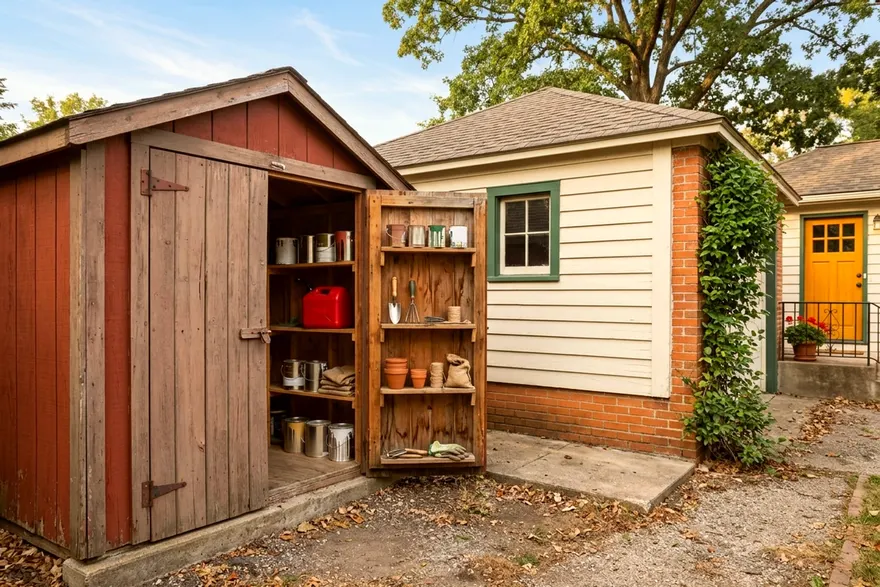
Keep gasoline, propane, paint and running engines out of your attached garage to protect your home from fast-moving fires. Paper goods and extra food belong inside the house to keep pests away. The US Fire Administration says garage fires tend to spread farther and cause more injuries and dollar loss than fires starting elsewhere in the home.
1. Gasoline, oil and other fuels
Lawn mowers and snow blowers need gasoline to run, so many homeowners keep a red plastic jug sitting right next to the machine. Gasoline gives off vapors that can ignite, and the product label explains the risks.
The US Fire Administration says to store oil, gasoline, paints, propane and varnishes in a shed away from your home. A detached shed keeps fuel farther from your living space.
Keep your fuels in approved plastic or metal containers with tight caps. Set them on a low shelf in your shed. Wipe up any drips on the side of the can before you put it away. This stops odors from lingering and prevents slippery spots.
2. Propane tanks
Gas grills run on steel propane cylinders. You might also have small green propane bottles for camping stoves. Check the label on each tank for storage and handling directions.
The US Fire Administration says to store propane in a shed away from your home.
Follow the tank label on how to store it, and keep spare cylinders outside and away from your home.
3. Paints, varnishes and solvents
Half-empty paint cans stack easily on wire shelves, and paints, varnishes and thinners can burn. Check each label for storage directions.
Because of these hazards, the US Fire Administration says to store paints and varnishes in a shed away from your home. Make sure the lids are closed tight before you walk away.
Check the paint label for freezing guidance, and ask your local household hazardous waste agency where to keep paint if your shed freezes. Write the room name and the date on the lid with a black marker.
4. Mixed leftover chemicals
Homeowners often try to save shelf space by combining half-empty bottles of cleaning supplies. Mixing lawn care liquids or pool chemicals into one jug can be hazardous.
The EPA says to keep household hazardous products in their original labeled containers and never mix leftovers. A chemical mixture can be dangerous, so check each label.
Always read the original label for storage temperatures and handling rules. Check each label for what the product should be kept away from. Keep heavy jugs on sturdy lower shelves so they do not fall and crack. Place smaller bottles in a plastic tub to catch any slow leaks.
5. Running engines and generators
A garage protects you from the rain while you test a small engine. It keeps the wind off your face while you warm up a car in the winter. The CDC says never to run a car or truck inside a garage attached to a house, even with the garage door open.
Carbon monoxide is an invisible gas with no smell. It is poisonous, and an open garage door does not make it safe.
Portable generators produce carbon monoxide. The CDC says never to use a generator inside your home or garage, even if doors and windows are open. Check the generator manual for safe outdoor placement.
6. Charging batteries on extension cords
Power tools and lawn equipment use large lithium batteries that require frequent charging. The US Fire Administration says not to use an extension cord when charging an appliance, and to plug only one charging appliance into an outlet.
Extension cords are made for temporary work. Plug your battery chargers directly into a wall outlet.
Follow the charger's instructions for when to remove the battery and unplug it. If you plan to set up a garage workbench, ask a licensed electrician about adding wall outlets nearby so you do not need cords across the floor.
7. Paper goods and food that draw pests
Bulk toilet paper, stacked cardboard boxes and bags of dog food look convenient sitting on a concrete slab. These items can attract mice, rats and insects. Rodents use soft paper to build nests in the dark corners behind your tools.
Cardboard can absorb moisture from the concrete floor and break down over time. Open bags of bird seed or pet food can attract wild animals.
Store dry paper goods inside your home where the climate stays steady. Break down empty cardboard boxes and put them in the recycling bin. Move all pet food and grass seed into heavy plastic bins with tight lids. If you see chewed paper, look for small holes in your yard that point to a pest problem.
8. Where to take what you no longer need
Old harsh chemicals and dried paint cans take up valuable space. Do not pour them down the drain or put them in your regular trash without checking local rules.
The EPA says to contact your local environmental, health or solid waste agency to find household hazardous waste collection. Many areas run drop-off centers or collection events, so ask your local agency.
Check your city website for drop-off dates and accepted materials. Ask the facility how to pack and bring them. Getting rid of old fluids clears shelf space and removes hazards from your property.
9. What to add for garage fire safety
An attached garage needs specific warning devices to keep your family safe. Most homes have smoke alarms in the bedrooms and hallways. A garage needs a different kind of alarm than the rest of the house.
The US Fire Administration recommends a heat alarm, not a smoke alarm, in the garage. The USFA says a heat alarm sounds if the temperature rises too high.
Read the alarm's instructions for type, testing and mounting, or ask a licensed electrician to install it.
How to plan your garage storage
Walk out to your driveway with a few empty cardboard boxes. Read the labels on every jug, can and bag sitting on your shelves. Separate the fuels and paints that belong in a shed from the bulk household supplies that belong indoors.
Group your remaining tools and car care supplies by category. Car wash soaps and waxes can usually stay on the shelf in their original bottles if the label allows. Hand tools and garden hoses are not fuels and fit nicely on a pegboard.
Taking an afternoon to sort these items makes your whole house safer. Once you move the hazards out, you have clean shelves ready for the tools and gear you actually use.
More from down the street
How to set up a garage workbench that fits your projects
Set up a garage workbench that fits your space and projects with the right dimensions, a tough work surface, bright lighting and safe power access.
How to choose garage storage cabinets that last
Find the right garage storage cabinets to organize your tools and gear. Learn how to measure your space, choose materials and anchor heavy duty units safely.
14 garage organization ideas that fit the car back in
Get your parking spot back with these practical garage organization ideas that help you clear the floor, sort your tools and claim the space.